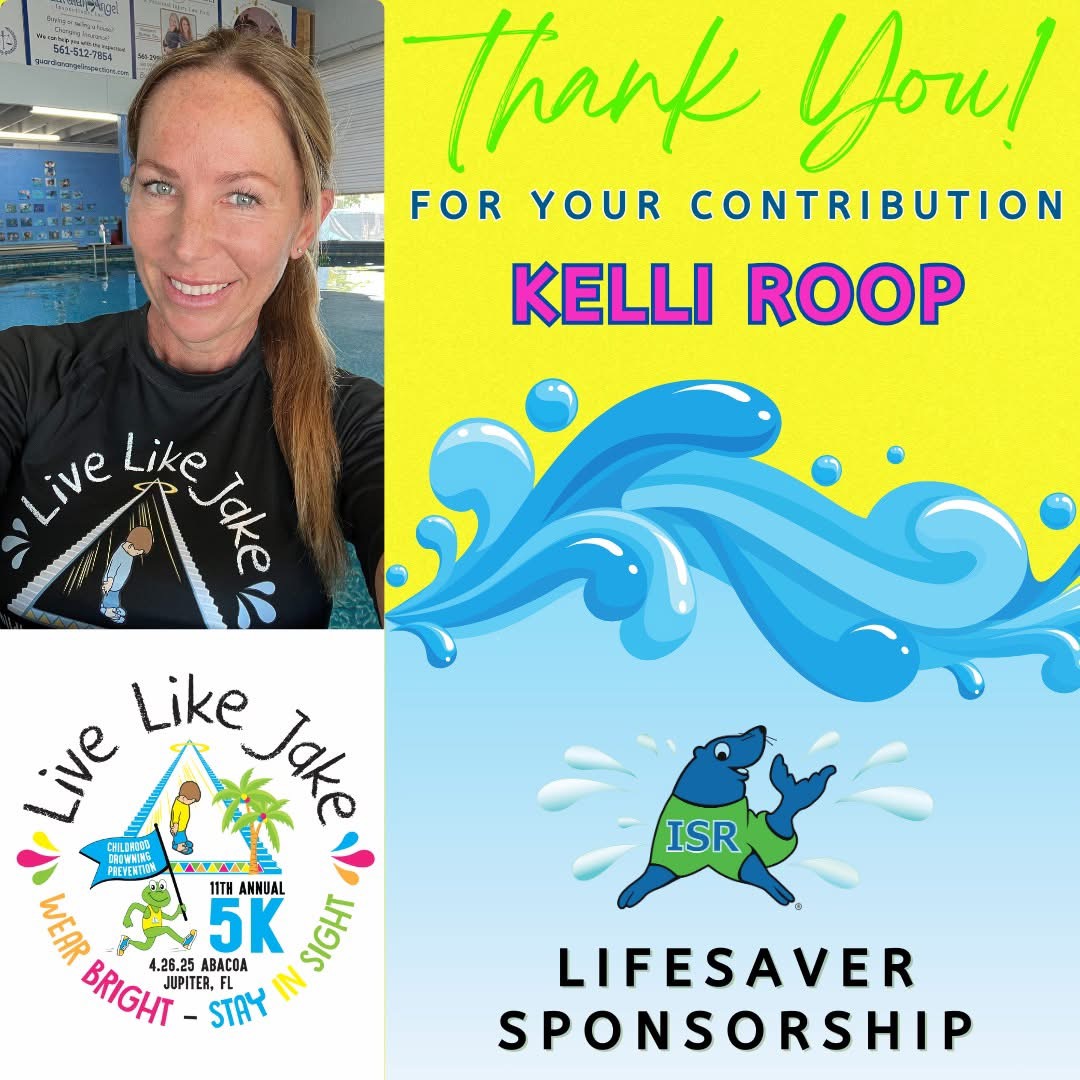
Swim with Miss Kelli!
The sooner, the safer!
As a mother myself, I understand the immeasurable value of family. My mission is to ensure no family ever has to experience a preventable tragedy.
Your Water-Safety Instructor
Since becoming certified in 2008, and advancing to Master Instructor in 2016, it has been a joy to serve the families in my community-and to train other instructors so that even more chidden can learn these essential life saving skills.
What began as a trusted, comprehensive program in Gainesville, Florida- backed by research in child psychology, anatomy, and physiology, has grown international.
FAQs
If more frequent but shorter lessons are better, then why don’t you teach 7 days/week?
Everyone needs a little break from learning to process the information and in this case to give muscles a
chance to recover. In addition, you need to be able to spend time with your family, as does your
instructor. Weekends are family time. Periodically, if weather or other issues have cause lessons to be
canceled for numerous days, your instructor may choose to offer make-up lessons on a weekend. This is
strictly up to the instructor and based on the availability of parents.
How can you teach babies and young children to swim?
ISR instructors teach infants to swim by honoring each child's individual strengths and experiences. They
understand the fundamentals of the behavioral sciences, child development and of sensori-motor
learning as it relates to the acquisition of aquatic survival skills; they use this education to guide each
child through the sequence of learning to swim and float.
Why don’t parents participate in the water during the lessons?
We do not want the baby to initially associate the water with the love, attention, and affection of the
parent while in the water. Also, it takes incredible concentration and objectivity to teach the baby how to
respond to an aquatic emergency and our experience shows that parents often find it too difficult to be
objective to be effective teachers with their own children in the water. We gladly invite parents to join us
in the pool once their child has independent skills to practice at home.
Can you really teach a child who is not verbal how to swim?
Yes. Consider that children learn to sit, crawl and walk before they learn to speak. Because we teach
through sensori-motor learning, verbal skills are not required for a child to acquire Self-Rescue skills. We
are able to communicate with our students through touch and positive reinforcement while striving to
set our students up for success every step of the way.
Reach out today
Discover more about our programs and how we can help you.